
Inside Sesimi - Latest News and Stories
Stay up to date with the latest news and insights from the Sesimi team.
How to Make Equipment Dealer Marketing Work Locally
Published on 20 Oct 2026 by Sesimi Editorial
A national equipment campaign can provide strong creative, clear product messaging and a compelling offer. Dealers then need to connect it to available stock, local customer needs and a clear next step. Approved assets, adaptable templates and clear workflows help them make those changes quickly while keeping the campaign on brand.
This article in short: Equipment brands can help dealers put national campaigns to work by making approved assets easy to find, local details simple to update and campaign participation straightforward. The goal is a consistent brand with marketing that reflects what each dealership can offer.
A national equipment campaign can provide strong creative, clear product messaging and a compelling offer. Its local impact depends on how easily dealers can connect that campaign to available stock, customer needs and a clear next step.
| KEY TAKEAWAYS |
|---|
| 85% of US consumers surveyed consider contact information and opening hours important when researching local businesses. |
| 1 in 5 use maps as their default platform for local searches. |
| 30% are comfortable choosing one business from their research rather than building a shortlist. |
For equipment manufacturers and dealer networks, helping dealers make that local connection deserves as much attention as the campaign launch itself.
Dealer marketing combines national brand resources with local offers, product information and customer relationships to promote products and services through an authorised dealer network.
Build campaigns around dealer needs
Start with what the dealer needs to promote. A product launch, demonstration day and seasonal service offer each require different information and a different customer action.
A national mower campaign might introduce a product range. A participating dealer needs to show which models customers can see, where demonstrations take place and how to book. Those details turn product awareness into an opportunity to visit or enquire.
BrightLocal’s 2025 consumer search research, based on 1,000 US consumers, found that 85% considered contact information and opening hours important when researching local businesses. One in five started local searches in maps, while 30% were happy to choose a single business from their research. These findings reinforce the importance of making each dealership easy to find, assess and contact.
Build those local requirements into the campaign brief. Specify the audience, relevant products, details dealers can update and intended customer action. Each asset should give customers a clear route to an enquiry, visit or booking.
Make approved assets easy to find
Dealers need to know which materials are current and suitable for their market. A folder full of similarly named files makes that harder than it needs to be.
Organise campaign resources around how dealers use them. Keep product imagery, approved copy and channel templates together, with campaign dates, regional availability and usage restrictions clearly visible.
A useful campaign kit should include:
- Approved product images and descriptions.
- Templates for the channels dealers use.
- Offer dates and required disclosures.
- Instructions for local changes and approvals.
- A contact for questions.
A central digital asset management system gives dealers one place to find approved content. Clear organisation and regular maintenance help them find the right material quickly.
When a campaign ends, archive expired assets and clearly mark them as unavailable for use. Dealers should be able to identify the current version without searching old email threads.
Let dealers adapt the right details
Consistency is easier to maintain when dealers know what they can change.
Protect core brand elements, product claims and required disclosures. Let dealers update designated fields such as their address, contact details, event date and approved local offer.
For a demonstration day, the manufacturer could provide product imagery, a headline and the design. Each dealer adds the location, models available to demonstrate, event time and booking details. Those details carry across a social post, email invitation and printed flyer.
Creative automation supports this approach through reusable templates that let dealers create local materials within established brand rules.
A national campaign becomes useful locally when a dealer can turn it into a clear offer and a clear next step.
Templates should also reflect differences across the network. Product availability, seasonal demand and offers may vary by region. Plan for those variations so dealers can choose relevant options within the approved templates.
Remove friction from campaign participation
Review the steps between a dealer receiving a campaign announcement and publishing their first piece of marketing.
Dealers should know which materials to use, what they can change, whether approval is required and when the campaign runs.
Keep instructions alongside the assets. Distinguish routine template edits from changes that need review, and make it clear where dealers can get help with questions or exceptions.
If co-op funding is available, explain the requirements upfront. Specify which activities qualify, whether pre-approval is needed and what evidence dealers must retain.
Clear co-op fund management processes bring campaign and funding requirements together, helping dealers understand what is involved before committing time or budget.
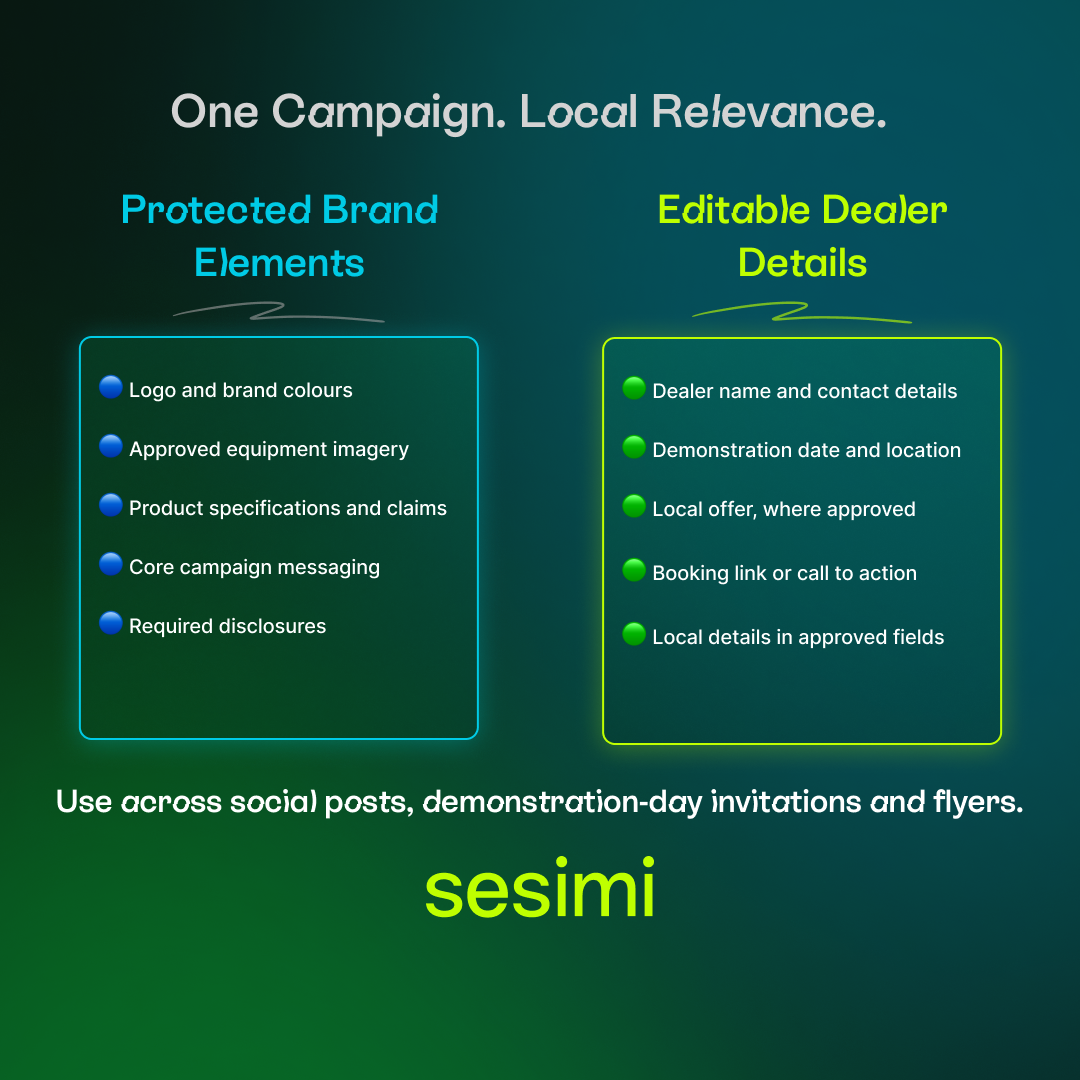
Shared campaign assets protect core brand elements while giving dealers room to adapt approved local details.
Measure local use and improve the next campaign
Launching a campaign makes the material available. Dealer participation shows whether the network is putting it to work.
Track how many eligible dealers participate, how quickly they publish and which assets or templates they use. Review approval times and recurring support requests to identify delays.
Where tracking allows, connect that activity to customer responses such as enquiries, demonstration bookings, event registrations or service appointments.
Keep these measures distinct. A download shows access to an asset. A published promotion shows campaign activity. A booking records a customer response.
Ask dealers what helped and what held them back. Low participation may reflect unsuitable offers, missing formats or unclear instructions. Use their feedback to improve the next campaign.
Make your next campaign easier to use
Test one upcoming campaign with a small group of dealers. Ask them to find the assets, adapt the material and prepare it for publication. Their experience will reveal where clearer information, better templates or simpler steps would help.
Sesimi brings approved assets, local content creation and co-op fund management together to help equipment brands support campaign delivery across their dealer networks.
Frequently asked questions
What should an equipment dealer marketing kit include?
An equipment dealer marketing kit should include approved product images and copy, editable templates, campaign dates, required disclosures and publishing instructions. Include local offer options, approval requirements and co-op funding details where applicable.
How can manufacturers keep dealer marketing on brand?
Manufacturers can protect core brand elements and required messaging within approved templates while letting dealers update local details. A central asset library and clear approval rules help dealers use current materials consistently.
How can co-op funds support dealer marketing?
Co-op funds contribute to the cost of approved local marketing. Clear eligibility rules, approval requirements and claim instructions help dealers plan activities and submit the evidence required for reimbursement.
If you would like to explore how creative automation fits within your content production workflow, book a short demo with the team.

Read other relevant blog posts:
 QSR Marketing: Keep Every Location on BrandDeliver consistent QSR marketing across locations with approved assets, adaptable templates and clear workflows for rebrands, promotions and growth.
13 Oct 2026 • Sesimi Editorial
 Where Governed Content Breaks | CMS Connect 2026Sesimi’s Mike Thompson shares lessons from CMS Connect 2026 on closing the gap between central content systems and governed local marketing production.
18 Aug 2026 • Sesimi Editorial
 What AADA 2026 Signals About the Future of Dealer MarketingExplore what AADA 2026 signals for dealer marketing, from local strategy + faster execution to smarter spending, connected systems + measurement.
11 Aug 2026 • Sesimi Editorial