
Andrew Baker, CEO and Founder of Sesimi, speaks at the Brand Innovators Marketing Leadership Summit during SXSW.
Inside Sesimi - Latest News and Stories
Stay up to date with the latest news and insights from the Sesimi team.
← Back to all posts 
What Marketing Leaders Took From SXSW
Published on 17 Mar 2026 by Sesimi Editorial
What marketing leaders took from SXSW
After several days at SXSW, within the Brand Innovators Marketing Leadership Summit, one theme kept coming up across sessions and conversations.
Marketing is operating under sustained pressure. More channels, more content, longer buyer journeys, and higher expectations around performance are now standard conditions.
The focus was not on novelty. It was on how teams are adapting in practice, and where execution is starting to strain.
The EV journey is long and marketing has to match it
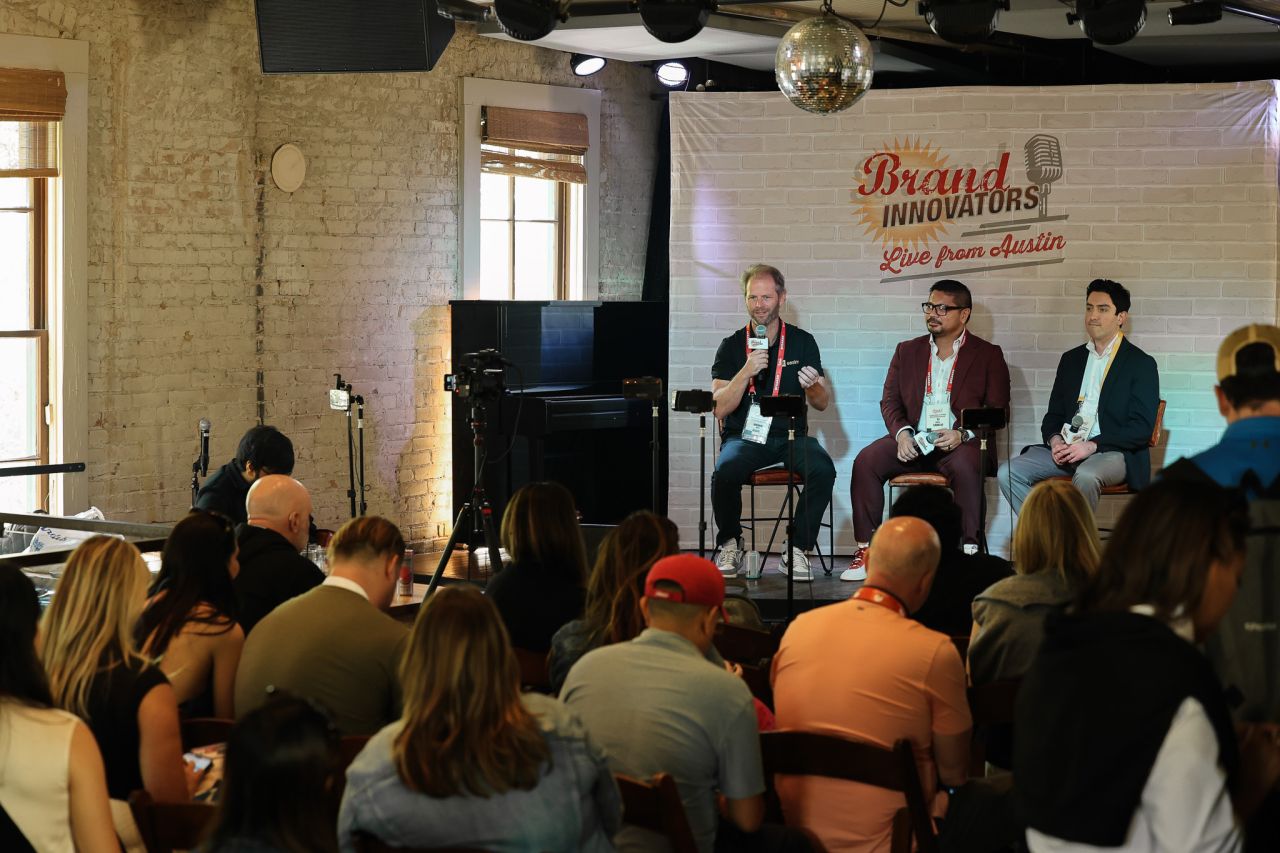
Automotive, particularly in the EV category, made the full complexity of modern buyer behaviour easy to see. The purchase journey is extended, non linear, and shaped by ongoing research across multiple sources. Customers move between platforms, revisit decisions, and validate choices over time.
“The EV buyer journey is long. We’re not talking about someone picking up a Pepsi at 7 Eleven. Buying a vehicle is the second most expensive decision most people will ever make and showing up consistently at every stage of that journey is exactly where the rubber hits the road.”
That changes the job marketing is being asked to do. It is not about driving a single conversion moment. It is about maintaining a consistent and credible presence across the full buyer journey. That requires alignment across channels, consistency between national and local execution, and systems that support continuity over time.
Shared Solutions
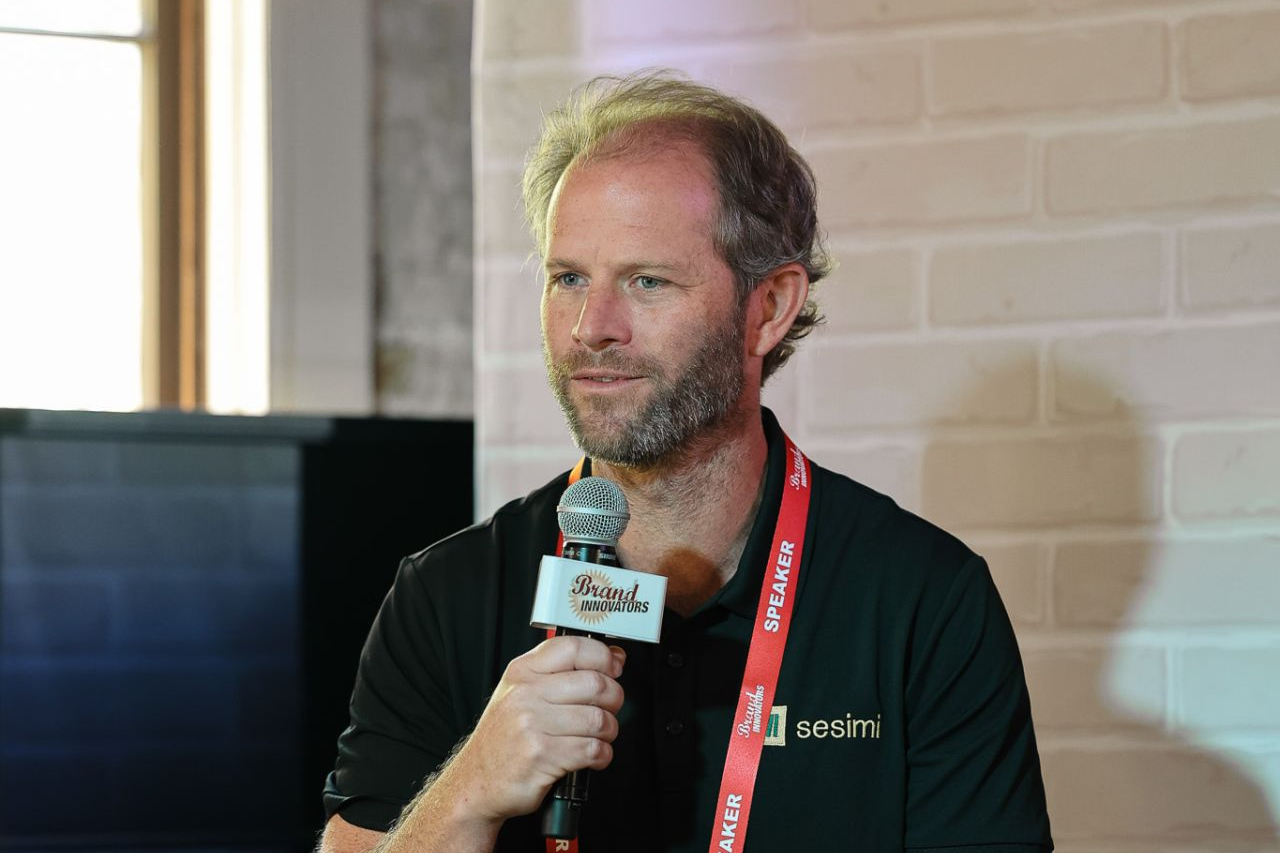
Andrew Baker, CEO and Founder of Sesimi, speaks at Brand Innovators in Austin on AI, marketing execution, and brand consistency at scale.
The role of marketing is shifting toward coordination. Teams are connecting brand, performance, data, and local execution across fragmented environments, rather than managing isolated channels. Execution now spans national strategy, local activation, and external platforms, many of which sit outside direct brand control.
Consistency is being treated as an operational capability. It is defined by the ability to show up reliably across every touchpoint that shapes the buyer journey, including owned channels, third party content, and AI generated surfaces. Presence, accuracy, and continuity are now directly linked.
AI is being applied within these systems to increase speed and scale. Workflows built on brand rules, customer data, and performance insights allow teams to generate, test, and refine content at volume. Continuous feedback loops ensure output remains aligned while improving over time.
The direction is clear. Coordinated execution, embedded governance, and continuous optimisation are becoming standard operating models, enabling organisations to scale activity without losing control or visibility.
A system problem
Brand strategy is defined centrally, while execution happens locally. Central teams need consistency, compliance, and efficient use of shared assets. Local teams need speed, relevance, and the ability to act independently.
As content demand increases and channels expand, manual coordination becomes less effective.
Distributed marketing is no longer just a process challenge. It is becoming a marketing operations problem.
Organisations making progress are embedding brand rules into the tools and workflows used by local teams. This creates controlled flexibility, where local activation can happen quickly without compromising brand integrity, while maintaining visibility across the network.
AI extending, not replacing
In applied environments, AI is being used in four consistent ways:
- Accelerating content production across formats and channels
- Increasing the speed and scale of testing cycles
- Enabling local teams to generate compliant variations
- Supporting rapid iteration based on performance signals
It is expanding execution capacity across the organisation, especially where content volume and localisation demands are increasing.
However, AI does not solve alignment. Without structure, increased output quickly leads to inconsistency. Brand systems, defined workflows, and human oversight remain necessary to ensure that what is produced aligns with strategic intent.
The emerging model positions AI as part of the execution layer, operating within boundaries set by marketing teams.
Content demand outpacing control
More channels and more local variations create sustained pressure on creative teams, approval workflows, and governance processes. As output increases, traditional control mechanisms struggle to keep pace.
This pressure is not coming from a single source. It is cumulative across multiple operational layers:
- Increasing number of channels requiring active presence
- Rising volume of localised and variant creative
- Compression of production and approval timelines
- Greater expectation for measurable performance
- Reduced visibility into what is live across markets
This leads to fragmentation. Messaging diverges, assets become inconsistent, and visibility into what is being deployed becomes limited.
Organisations are responding by shifting control closer to the point of creation. Rather than relying on post production review, they are embedding brand and compliance rules directly into the systems used to create and distribute content.
Where performance is determined
Strategy is not the primary constraint. Most organisations understand their audience, positioning, and channels.
The challenge is execution. It is the ability to activate campaigns quickly across markets, maintain consistency across touchpoints, and retain visibility into performance. This is where marketing outcomes are increasingly determined.
What is changing is not just the scale of execution, but the model behind it. Many organisations are moving from campaign led approaches to system led environments that support continuous activation.
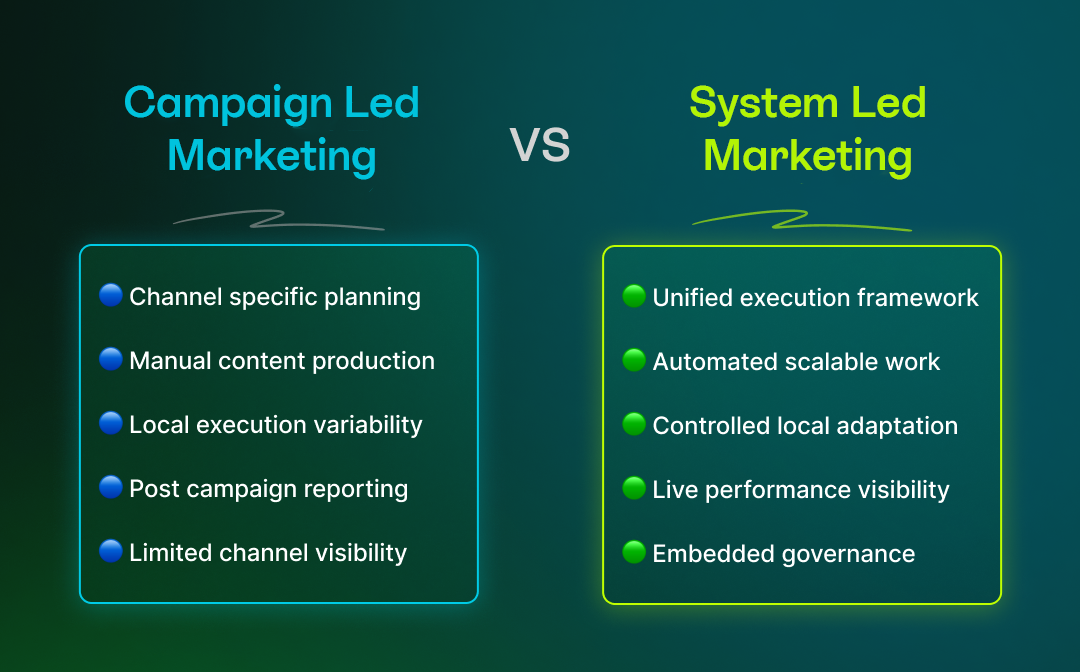
This shift reflects the operational reality discussed throughout SXSW. Performance is no longer driven by isolated campaigns, but by the consistency and reliability of execution across every touchpoint. Systems enable that consistency at scale, while maintaining the flexibility required for local activation.
Key Takeaways
Execution is becoming more distributed. Content demand continues to increase. AI is expanding production capacity. Buyer journeys are longer and more complex.
The organisations progressing are not just refining strategy. They are investing in the systems that support execution at scale.
Systems that allow local teams to act within defined boundaries. Systems that maintain consistency across channels and regions. Systems that provide visibility into what is being deployed and how it performs.
Marketing is increasingly defined by how effectively teams coordinate execution across systems, not just how they plan campaigns.
Learn how Toyota Australia achieved a 15x ROI utilizing Sesimi: Read more here

Read other relevant blog posts:
 The Brand Recognition Paradox: Why More Content Doesn't Build Stronger BrandsPublishing more content does not automatically build stronger brands. Discover why consistency, distinctive brand assets, and disciplined execution create lasting brand recognition.
13 July 2026 • Sesimi Editorial
 OEM Marketing in 2026: Five Trends Redefining Brand Control and Dealer SpeedFive OEM marketing trends shaping 2026, covering creative automation, dealer execution, governance, and compliance at scale.
30 June 2026 • Sesimi Editorial
 Sesimi Wins the 2026 DXP March Madness CompetitionHow multi location brands scale globally while maintaining brand consistency, localisation, and operational control.
20 Apr 2026 • Sesimi Editorial