
Inside Sesimi - Latest News and Stories
Stay up to date with the latest news and insights from the Sesimi team.
What Franchise Leaders Are Prioritising in 2026: Insights from FGMC
Published on 16 June 2026 by Sesimi Editorial
The Franchise Growth and Marketing Conference (FGMC) brought together franchise marketers, operators, technology leaders, and growth teams to discuss the forces shaping franchise growth.
While sessions covered everything from local marketing playbooks and franchisee adoption to data integration and AI, several themes emerged consistently throughout the event.
The strongest franchise brands are not simply investing in more technology or running more campaigns. They are connecting national strategy with local execution, improving visibility across their networks, and helping franchisees make better decisions.
Here are five priorities that stood out across FGMC 2026.
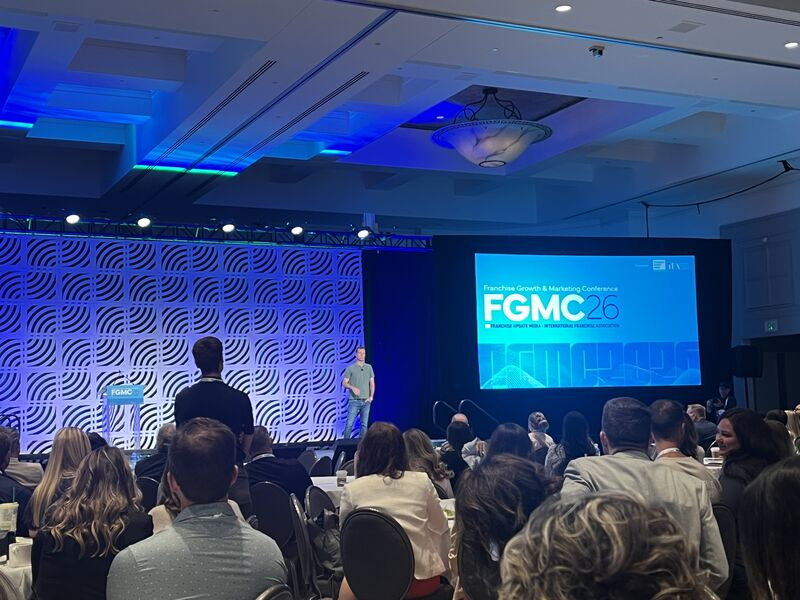
Franchise marketers, operators, and technology leaders networking at FGMC 2026.
| Quick Takeaways From FGMC 2026 |
|---|
| Local activation is becoming a primary driver of franchise growth. |
| Franchisee adoption improves when execution is simple and clearly linked to business outcomes. |
| AI is moving beyond content creation into operational support, knowledge management, and decision making. |
| Connected data is becoming a competitive advantage across franchise networks. |
| Marketing performance is increasingly measured by business outcomes rather than activity metrics. |
| Successful AI adoption depends on governance, education, and practical business value. |
Local Activation Is Becoming the Growth Engine
One of the strongest themes throughout the conference was the growing importance of local execution.
National campaigns remain critical for brand awareness and consistency, but speakers repeatedly highlighted that local activation is where trust, relevance, and conversion are created.
Examples shared throughout the conference showed how local events, community partnerships, influencer activity, and grassroots marketing amplified national campaigns while delivering measurable business outcomes.
At the same time, discussion shifted beyond traditional local area marketing toward what many described as hyperlocal decision making. Rather than treating every location the same, brands are increasingly using location specific data, customer behaviour, trading area insights, weather, inventory, and operational conditions to guide local marketing activity.
The implication is significant. National marketing creates momentum. Local execution determines whether that momentum translates into results.
For franchise brands, the challenge is no longer creating campaigns. It is enabling locations to activate them effectively, particularly as organisations focus on scaling local marketing without slowing execution while maintaining visibility across increasingly complex networks. Many are also investing in elevating local area marketing across distributed networks as local activity becomes a larger contributor to overall growth.
Franchisee Adoption Matters More Than Marketing Complexity
Many of the highest performing initiatives discussed at FGMC shared a common characteristic.
They were simple.
Presenters consistently challenged the idea that more sophisticated marketing automatically produces better outcomes. Instead, successful programs focused on making execution easy, removing friction, and clearly connecting activities to business outcomes.
The most successful playbooks combined simple actions, peer learning, scorecards, incentives, and practical guidance. Franchisees were given clear next steps, approved assets, and enough flexibility to adapt activity to their local market.
The most effective playbooks were not presented as marketing activities. They were presented as business growth opportunities.
This distinction matters. Franchisees are not evaluating whether a campaign is creative. They are evaluating whether it helps grow their business. Achieving adoption at scale often requires balancing governance with usability, particularly when maintaining brand control and compliant creative across large dealer and franchise networks.
AI Is Moving Beyond Content Creation
AI appeared throughout the conference, but the discussion was notably different from many marketing events.
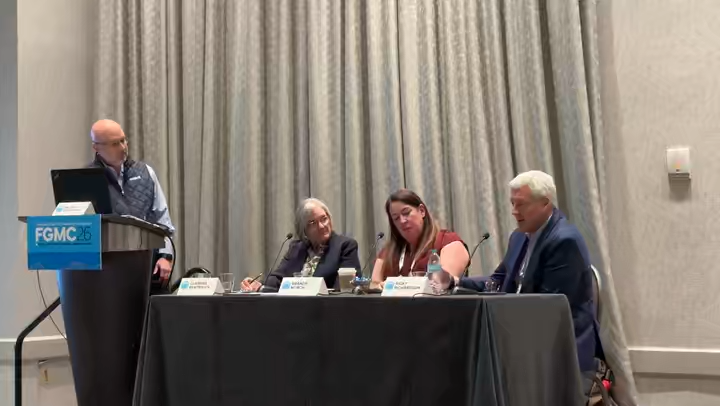 Mike Thompson, Director of North American Sales at Sesimi, moderates the panel MarTech, AI & Data That Actually Drives Growth: AI in the Field and at Scale at FGMC 2026.
These themes were reinforced during MarTech, AI & Data That Actually Drives Growth: AI in the Field and at Scale, a panel moderated by Mike Thompson, Director of North American Sales at Sesimi. Across franchise, restaurant, and home services brands, panelists consistently emphasised that AI adoption is being driven by practical operational outcomes rather than experimentation. The focus was on reducing friction, improving access to knowledge, supporting local operators, and creating measurable business value rather than pursuing AI for its own sake.
Rather than focusing on content generation, speakers focused on operational intelligence. The conversation centred on creating connected intelligence layers that combine marketing, operational, customer, financial, and location level data to support better decisions.
The discussion focused on practical outcomes:
- Faster decision making
- Better local recommendations
- Improved visibility
- Predictive planning
- Greater operational efficiency
- Increased revenue
The message was consistent across multiple sessions. AI is becoming infrastructure rather than a standalone marketing tool.
Similar observations were shared during Mike Thompson's panel discussion, where speakers highlighted knowledge management, operational support, and decision making as some of the most practical AI applications currently being deployed across franchise networks. Rather than focusing on content generation, the discussion centred on helping operators access information faster and make better decisions.
For franchise organisations, the opportunity is not simply creating more content faster. It is creating better decisions at scale as organisations increasingly use AI systems to reshape content delivery and improve execution, governance, and operational performance.
Data Integration Is Becoming a Competitive Advantage
Another recurring theme was data fragmentation.
Many franchise organisations continue to operate with disconnected systems across marketing, operations, CRM, customer experience, reporting, and finance. While data exists throughout the business, it often remains difficult to access, connect, and act upon.
Several speakers argued that disconnected systems limit visibility and make meaningful decision making increasingly difficult.
Panelists also discussed the growing role of connected knowledge systems that combine operational, marketing, and business information into a single source of truth. The goal is not simply providing more data, but helping franchisees and support teams access the right information when they need it.
Examples shared throughout the conference demonstrated how connected systems can improve visibility and support faster decisions.
The competitive advantage is no longer simply collecting data.
It is connecting, governing, and activating it. This becomes increasingly important for organisations focused on scaling global brands without losing brand consistency while supporting hundreds or thousands of locations.
Marketing Is Being Measured by Business Outcomes
Perhaps the most important theme from FGMC was the continued shift toward accountability.
Marketing teams are increasingly being evaluated on their contribution to business performance rather than campaign activity.
Throughout the conference, presenters consistently linked initiatives back to outcomes such as:
- Revenue growth
- Franchisee profitability
- Unit economics
- Operational efficiency
- Customer retention
- Incremental sales
Even discussions around franchisee adoption focused less on participation metrics and more on whether programs improved business performance over time.
This reflects a broader shift occurring across franchising.
Marketing is no longer viewed solely as a brand or communications function. It is increasingly recognised as a growth function that must contribute directly to commercial outcomes.
As a result, franchise marketing leaders are being asked to provide greater visibility, stronger measurement, and clearer links between activity and performance.
Governance was another recurring theme. During the panel moderated by Mike Thompson, speakers discussed the importance of policies, guardrails, education, and oversight as AI adoption expands across franchise networks. The consensus was that successful implementation requires balancing innovation with brand protection and operational consistency.
What This Means for Franchise Brands
FGMC 2026 highlighted an industry becoming more local, more measurable, and more operationally focused.
The strongest franchise networks are building systems that connect national strategy with local execution. They are simplifying adoption for franchisees, improving visibility across their networks, and using data to support faster, more informed decisions.
As automation, connected data, and intelligence platforms become increasingly embedded into franchise operations, the gap between high performing networks and the rest of the market is likely to widen.
The organisations creating sustainable growth will be those that can combine brand consistency with local relevance while giving franchisees the tools, guidance, and visibility needed to execute effectively.
See How Sesimi Helps Franchise Brands Scale Local Marketing
Franchise growth depends on more than strong national campaigns. It requires local execution, franchisee adoption, and visibility across the network.
Sesimi helps franchise and multi location brands connect national strategy with local execution through brand governance, campaign automation, local marketing enablement, digital asset management, and performance visibility.
See how franchise brands are using Sesimi to scale local marketing, improve adoption, and increase visibility across their network.
FAQ
Is franchise growth being driven by marketing alone?
No, franchise growth is not being driven by marketing alone. Leading brands are increasingly connecting marketing, operations, data, franchisee enablement, and local execution to improve business performance.
Is AI replacing franchise marketing teams?
No, AI is not replacing franchise marketing teams. Most discussions at FGMC focused on AI supporting decision making, knowledge management, operational efficiency, and visibility. The priority is helping teams make better decisions rather than replacing them.
Can national campaigns alone drive local growth?
No, national campaigns alone cannot drive local growth. Franchisees still need locally relevant execution that reflects their customers, communities, and operating conditions to translate national strategy into business results.

Read other relevant blog posts:
 Where Governed Content Breaks | CMS Connect 2026Sesimi’s Mike Thompson shares lessons from CMS Connect 2026 on closing the gap between central content systems and governed local marketing production.
18 Aug 2026 • Sesimi Editorial
 What AADA 2026 Signals About the Future of Dealer MarketingExplore what AADA 2026 signals for dealer marketing, from local strategy + faster execution to smarter spending, connected systems + measurement.
11 Aug 2026 • Sesimi Editorial
 What Cannes Lions 2026 Revealed About the Future of Brand ManagementCannes Lions 2026 showed how AI, creators and connected platforms are changing brand management for enterprise and distributed marketing teams.
8 July 2026 • Sesimi Editorial